
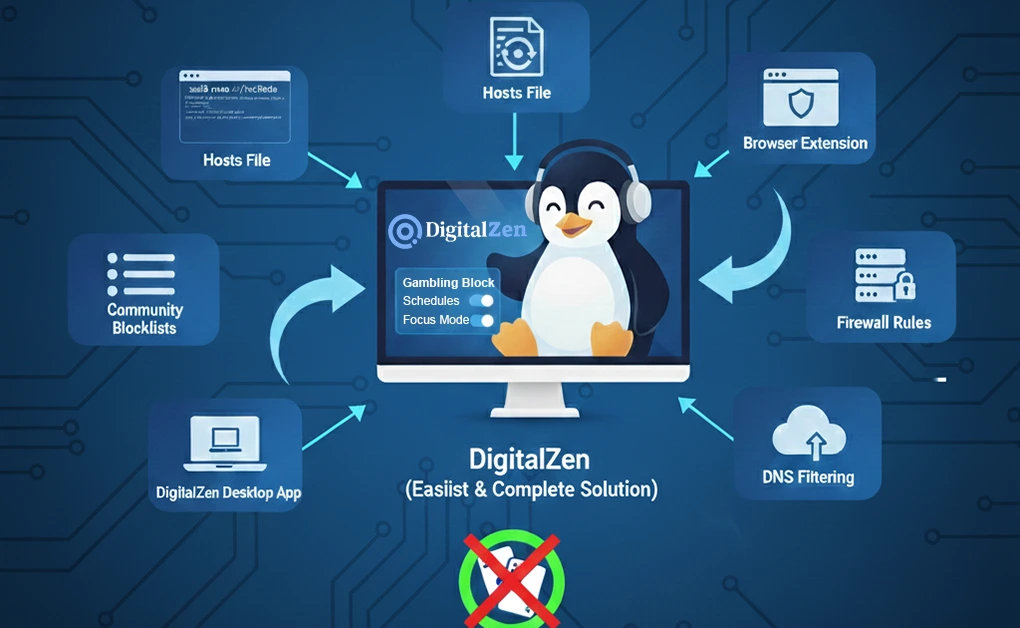
You can block gambling sites on Linux using DigitalZen, the /etc/hosts file, DNS filtering, firewall rules, or community-maintained domain blocklists. The easiest method is the DigitalZen app, which blocks gambling websites and apps system-wide with schedules, focus timers, and hard locks that are harder to bypass.
Key Takeaways
- Linux provides multiple ways to block gambling sites: each manual method requires updates, technical setup, and ongoing maintenance to stay effective.
- Browser extensions offer quick blocking: they are easy to set up but can be bypassed, which is why system-level controls are more dependable.
- DigitalZen provides the easiest complete solution: it blocks gambling websites and gambling apps across the entire Linux system and includes anti-bypass protections that manual tools do not offer.
- Blocking gambling sites supports healthier digital habits: removing access reduces impulsive decisions, protects shared devices, and helps maintain focus, emotional stability, and financial control.
Method 1: Block Gambling Sites Using a Browser Extension
Browser extensions are the simplest way to block gambling websites on Linux. They run directly inside your browser and let you block URLs, keywords, or categories without using the terminal or system settings. This is the best quick-start method for lightweight website blocking.
How to Set Up a Browser Extension
- Open your browser’s extension/add-on store.
- Install a website-blocking extension.
- Add gambling URLs or keywords you want blocked.
- Set optional schedules or time limits.
Strengths
- Works on most major browsers (Chrome, Firefox, Edge, Brave, Opera)
- Easy installation with no technical skills needed
- Blocks gambling URLs, keywords, or categories
- Supports schedules, timers, and daily limits
- Good for lightweight or browser-only control
Limitations
- Does not block gambling desktop apps
- Only works in the browser where it’s installed
- Users can bypass it by switching to another browser
- Extensions can be removed or disabled easily
Method 2: Block Gambling Websites And Apps Using the DigitalZen Desktop App
The DigitalZen desktop app is the strongest way to block gambling content on Linux. It blocks gambling websites across all browsers and also blocks gambling apps, casino clients, and betting software at the system level. It also includes powerful anti-bypass protections that prevent extension removal, app termination, and uninstallation.
How to Block Gambling Sites With the DigitalZen Desktop App
- Install the browser extension to enable instant website blocking.
- Click the “One Click Setup” button to activate recommended settings and start running DigitalZen right away.
- Install the desktop agent (optional but recommended) to block gambling apps, prevent extension removal, and enable all system-wide protections.
- Open the app and turn on the gambling block template.
- Enable Adaptive Locks if you need stronger, non-bypassable protection.
Strengths
- Blocks gambling websites across all browsers
- Blocks gambling apps, software, and desktop apps
- Real Linux desktop support
- Predefined blocking templates, including gambling
- Adaptive lock system with
-
- Cooldown Lock (forced waiting time)
- Code Lock (long code entry)
- Friend Lock (third-party approval)
- Money Lock (self-imposed penalty)
- Prevents browser extension removal
- Prevents stopping or killing the app
- Uninstall protection
- Supports Focus Mode, daily limits, wellness schedules
Limitations
- Requires installing the desktop agent for blocking apps
- Determined users with full sudo/root access can technically find ways to override any system-level tool on Linux (this applies to all blockers, not just DigitalZen)
Method 3: Block Gambling Sites on Linux Using the /etc/hosts File
Editing the /etc/hosts file blocks gambling websites by redirecting them to 127.0.0.1, which prevents the domain from loading. This method works on every Linux distribution, requires no extra software, and applies system-wide across browsers and apps.
How to Block Gambling Sites Using the /etc/hosts File
- Open the hosts file:
sudo nano /etc/hosts
- Add each gambling domain you want to block, for example:
127.0.0.1 examplegamblingsite.com
- Save and close the editor (CTRL + X, then Y, then Enter).
- Flush the DNS cache:
sudo systemd-resolve –flush-caches
Strengths
- Built into all Linux distributions, no extra software needed
- Works system-wide across browsers and applications
- Fast and simple to configure
- Effective for blocking a small list of specific gambling sites
Limitations
- Easy to bypass if the user has admin/sudo access
- Requires manually adding and updating entries
- Doesn’t block new or unknown gambling domains
- Changes can be undone unless the file is hardened
Method 4: Block Gambling Sites on Linux Using DNS Filtering
DNS filtering blocks gambling sites before your browser or apps even reach them. By switching to a DNS provider that filters gambling domains automatically, you can enforce system-wide protection without editing system files or installing extra software. This method is harder to bypass than browser extensions and works on any Linux distribution
How to Block Gambling Sites Using DNS Filtering
1. Open your Linux Network Settings.
2. Select your active network interface (Wi-Fi or Ethernet).
3. Open the IPv4 and/or IPv6 configuration panels.
4. Replace your current DNS entries with DNS resolvers that filter gambling content.
5. Save the settings.
6. Restart NetworkManager:
sudo systemctl restart NetworkManager
Strengths
- Blocks entire categories of gambling sites automatically
- Works system-wide across all browsers and apps
- Simple to configure from network settings
- Harder to bypass than browser extensions
- No installation required, uses built-in Linux networking
Limitations
- Users with admin access can still change DNS settings
- May not block gambling apps that use hardcoded IP addresses
- Filtering quality depends on the DNS provider
- Can be bypassed by VPNs unless other methods are layered
Method 5: Block Gambling Sites on Linux Using Firewall Rules (iptables/nftables)
Linux firewalls allow you to block gambling sites at the network layer by dropping connections to specific IP addresses, IP ranges, or entire networks used by gambling providers. Because the block happens before the request reaches any app or browser, this method is stronger than simple DNS or browser-level filters.
How to Block Gambling Sites Using Firewall Rules
- Identify the IP addresses or IP ranges used by the gambling sites you want to block.
- Block them using iptables, for example:
sudo iptables -A OUTPUT -d 203.0.113.0/24 -j DROP
- Or block them using nftables:
sudo nft add rule inet filter output ip daddr 203.0.113.0/24 drop
- Save and persist your firewall rules.
- Repeat as needed for additional IPs or ranges.
Strengths
- Works at the network layer, making it harder to bypass
- Blocks gambling traffic across all browsers and applications
- Can block full IP ranges or ASNs
- Provides deep control for advanced users
- Uses built-in Linux firewall tools, no extra software required
Limitations
- Requires technical knowledge of firewall commands
- Gambling sites frequently rotate IP addresses
- Needs ongoing maintenance or updated blocklists
- Users with root access can modify or remove firewall rules
Method 6: Use Community-Maintained Gambling Blocklists for Better Coverage
Community-maintained blocklists contain thousands of known gambling domains collected and updated by open-source maintainers. Importing these lists into your hosts file, DNS resolver, or firewall gives you broad protection without manually adding each domain.
How to Block Gambling Sites Using Community Blocklists
- Download a reputable open-source gambling blocklist.
- Choose how you want to use it:
- Hosts file: paste the domains directly into /etc/hosts
- DNS resolver: import into tools like dnsmasq, unbound, or a custom DNS server
- Firewall: convert domains to IP addresses and block them via iptables or nftables
- Apply the updated configuration.
- Set a reminder to update the blocklist periodically to keep coverage current.
Strengths
- Blocks thousands of gambling domains in a single import
- Frequently updated by open-source maintainers
- Compatible with any blocking method (hosts, DNS, firewall)
- Reduces manual work and ongoing maintenance
- Ideal for broad, automated, set-and-forget protection
Limitations
- If you know how to set it, you can easily remove it
- Quality and accuracy vary depending on the list maintainer
- Some domains may be miscategorized or missing
- Requires periodic updates to stay effective
- Must be integrated manually into your preferred blocking method
- Does not block gambling apps unless paired with other tools
Why You May Want to Block Gambling Sites

Blocking gambling sites on Linux can help reduce impulse-driven behavior, protect your finances, and support healthier digital habits. Whether you’re trying to stay focused, avoid addictive patterns, or safeguard shared devices, having automatic filters in place removes temptation before it becomes a problem.
Common Reasons People Block Gambling Sites
- Prevent impulsive spending or addiction: Gambling platforms are designed to encourage fast decisions. Blocking them helps stop automatic clicks and late-night betting urges.
- Avoid high-risk, high-reward triggers: Many people struggle with the constant cycle of “chase the win.” Removing access breaks that loop.
- Improve productivity and focus: Gambling sites can become a distraction during work or study hours. Blocking them keeps you on task.
- Protect children or shared devices: Blocking prevents minors or family members from accessing online casinos, betting sites, or slot games.
- Reduce exposure to compulsive behavior patterns: When urges strike, a block creates friction that helps you pause, reset, and regain control.
By setting these limits early, you build healthier online routines and reduce unnecessary digital triggers. It’s one of the most practical productivity tips for Linux users and for everyone who wants more focus and control.
Conclusion: Finding the Most Reliable Method to Block Gambling Sites on Linux
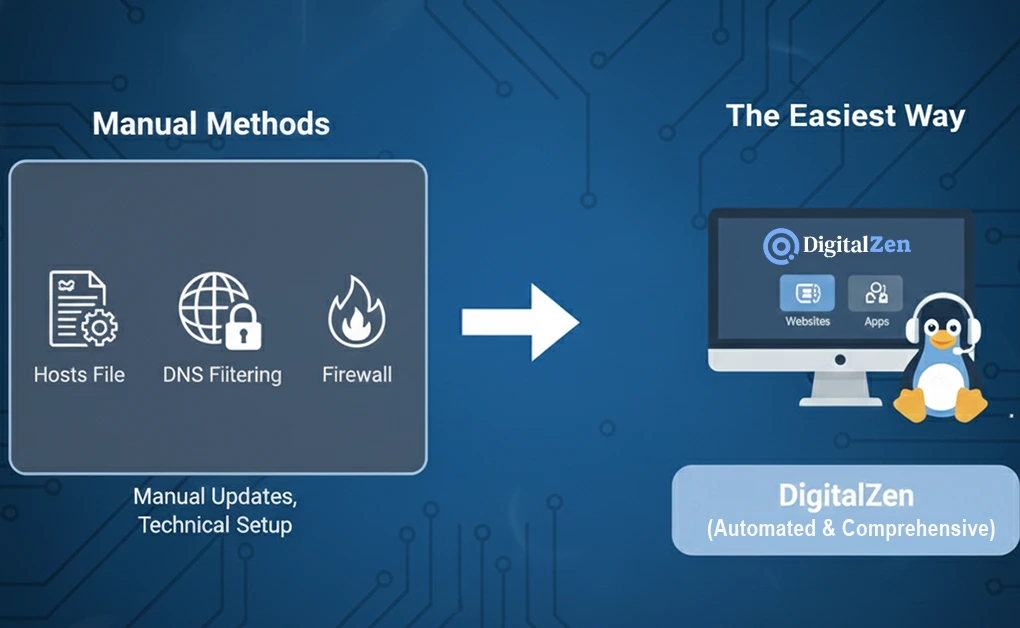
Linux gives you several ways to block gambling sites, but each manual method comes with its own maintenance and technical steps.
Editing the hosts file requires manual updates, DNS filtering needs correct configuration, firewalls must be maintained, and community blocklists rely on frequent refreshes. These tools work, but they require time, command-line access, and ongoing attention to stay reliable over the long run.
DigitalZen makes the process much easier. As a full Linux website and app blocker, it stops gambling websites and gambling apps across your entire system, and its protective lock options help prevent impulsive unblocking. You get strong, consistent protection without needing to tweak settings or manage multiple tools.
FAQs About Blocking Gambling Websites on Linux
What Is the Easiest Way To Block Gambling Sites on Linux?
The most reliable option is using the DigitalZen desktop tool. It offers strong, system-wide protection that’s harder to bypass and can block specific platforms across all browsers. Browser extensions are quicker to set up, but DigitalZen provides deeper control and more dependable restrictions.
Can I Block Gambling Apps on Linux, Not Just Websites?
Yes. Browser extensions only manage activity inside the browser, while DigitalZen’s desktop tool also restricts Linux programs tied to online gambling. With both an extension and a system-level tool working together, it is one of the best Linux website blocker solutions for users who need greater control.
How Do I Block Gambling Sites Without Installing Extra Software?
You can rely on built-in Linux tools such as editing the /etc/hosts file, switching to a filtering DNS resolver, or creating firewall rules. These options work across the system and can help reduce triggers tied to unhealthy gambling habits, though they require more manual maintenance and can easily be removed by the same user who implemented them.
Will These Methods Help Reduce Gambling Addictions or Impulsive Behavior?
Yes. Restricting access removes immediate entry points to betting platforms, which helps lower impulsive urges and supports healthier decision-making. DigitalZen’s schedules and locking features provide extra friction that is especially helpful for someone trying to control a developing gambling problem, with similar benefits to even blocking adult sites to reduce unwanted online triggers.
References: