

A dopamine detox will not reset your brain. You cannot flush out dopamine or lower it on purpose. It is a normal brain chemical you need every day. Strict, all-or-nothing detoxes also tend to fail, because they are hard to keep up.
But the idea is not useless. A planned, realistic break from stimulating habits can still help. It may let you notice how those habits affect your focus, sleep, mood, or daily routine.
Key Takeaways
- The name dopamine detox promises more than it delivers: You cannot clear out or lower dopamine by stepping away from your phone. Your brain needs it for everyday things like focus and motivation. A few days offline will not reset it.
- Going all-in is what usually breaks it: Cutting out everything at once is hard to keep up. When the break feels like a punishment, most people give up fast.
- Smaller plans last longer: Pick one habit. Set how long the break runs. Plan other things to do. Keep normal life going, like meals, work, exercise, and hobbies.
- A detox is a test, not a treatment: It will not fix addiction, ADHD, anxiety, or depression. If screen use is causing real stress, it is better to talk to a professional.
- The right tools take pressure off the moment: Blockers and locks limit easy access to the apps you want to pause. That way, following through does not depend only on resisting each urge.
Why a Dopamine Detox Doesn’t Work the Way People Think

Most people picture a dopamine detox as a reset. Step away for a few days, and your brain goes back to normal. That is not how it works. The term is scientifically oversimplified.
A dopamine detox does not ‘cleanse’ dopamine from your system. It does not lower your dopamine on purpose. And it does not guarantee that your brain will reset after a few days. Dopamine is a normal brain chemical. It is involved in motivation, learning, movement, attention, and reward. You need it to function.
So the popular promise behind the term does not hold up. But that does not make the practice useless. Reducing access to distracting or hard-to-stop activities may still help some people. They may notice changes in their focus, mood, or daily routine. This may be especially useful when checking, scrolling, or watching, which usually starts automatically.
What the Science Says
The science does not support a literal dopamine reset. But it does suggest that a planned break from certain digital habits may help some people. A more accurate description of a dopamine detox is a planned break from activities that often trigger automatic checking, scrolling, watching, or gaming.
Research on screen time, smartphone access, and social media breaks points in a similar direction. Reducing certain digital habits may support focus, well-being, stress levels, and sleep for some people:
- A Harvard Health article on dopamine fasting and common misconceptions explains that the original idea was not to remove dopamine. It was to reduce automatic responses to high-stimulation cues.
- A 2025 study in PNAS Nexus on blocking mobile internet on smartphones found that blocking mobile internet for two weeks reduced smartphone use. It also improved subjective well-being, mental health, and sustained attention among participants.
- A 2023 study on a two-week social media digital detox found improvements in smartphone and social media addiction measures, sleep, life satisfaction, stress, and perceived wellness after a two-week social media break.
For more context, how blocking websites and apps can support productivity explains how blocking tools can help reduce easy access to common digital distractions.
This does not mean a dopamine detox ‘resets’ the brain. It is better understood as a way to reduce access to digital habits. Those habits may be taking more attention, time, or energy than you want to give them.
Why Strict Dopamine Detoxes Tend to Fail
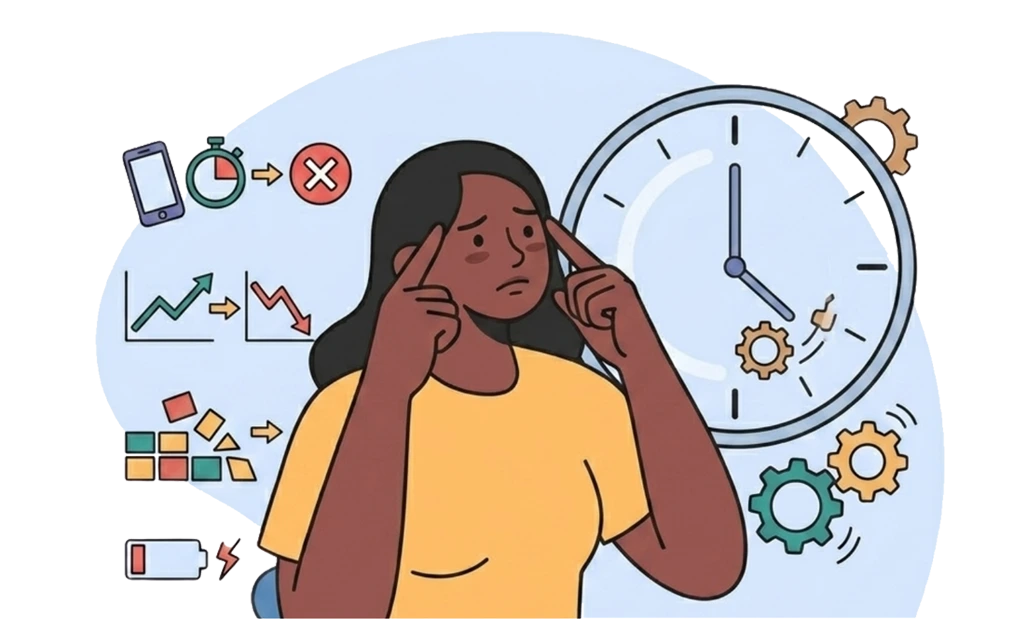
The reset idea is one problem. The other is how people try to do it. Many picture a dopamine detox as extreme: cut out everything, sit with the boredom, prove you can. That version is hard to keep up, and it often falls apart quickly. Here is why the strict approach tends to fail, and what works better.
1. It Tries to Cut Out All Pleasure
A strict detox often means sitting in a dark room doing nothing. That is not sustainable, and it is not the point. Normal activities like eating, exercising, socializing, working, reading, and spending time outside are fine. The goal is to reduce digital habits that feel too automatic. It is not to remove joy from your life. A break that still allows real life is usually easier to finish.
2. It Feels Like Self-Punishment
A detox that feels like punishment is hard to keep up. It should not be about proving discipline or forcing yourself to suffer. That framing makes the break something to dread, so it can be tempting to quit early. A better approach creates space between the urge and the action. That space may make it easier to choose what you want to do with your time.
3. It Is Treated Like a Medical Fix
A dopamine detox is not a treatment for addiction, ADHD, depression, anxiety, or any other condition. It is a lifestyle strategy, not medical care. Expecting it to fix a deeper problem may lead to disappointment. If digital use feels hard to manage, causes distress, or affects work, school, or relationships, it may help to speak with a qualified professional.
4. It Aims to Quit Everything Forever
A detox framed as “quit it all, for good” is hard to sustain. Most people do a dopamine detox for a set period. It may last a day, a weekend, one week, or longer. The goal is not always to quit everything forever. For many people, the goal is to return with better limits and clearer boundaries.
What Is a Dopamine Detox?
A dopamine detox is a temporary break from activities that feel too stimulating or hard to stop. It often targets moments when one quick check turns into scrolling, watching, gaming, or browsing longer than planned. Most people use the term for stepping away from digital habits like social media, streaming, gaming, and endless scrolling.
Despite the name, the goal is not to remove dopamine from your brain. A more accurate way to describe it is a planned break from stimulating digital habits.
The aim is to reduce automatic checking. It makes more room for slower activities that do not pull you into ‘just one more’ loops. It is not about avoiding enjoyment. It is about creating enough space to notice how certain habits affect your focus, mood, energy, sleep, or time.
What a Dopamine Detox Usually Targets
Common activities people limit during a dopamine detox include:
- Social media, such as Instagram, TikTok, Twitter/X, Facebook, and Reddit
- Streaming services, such as Netflix and YouTube
- Video games and mobile games
- News feeds and infinite scroll content
- Online shopping
- Short-form videos and autoplay feeds
- Sugary snacks or processed foods, for some people
You do not need to remove all of these at once. Most people pick just one or two to focus on.
How to Do a Realistic Dopamine Detox

A realistic dopamine detox is the version that actually holds up. The strict approach tends to fail, so aim for something specific, realistic, and planned in advance. Try not to make it too broad on your first attempt.
1. Choosing a Timeframe
Start small if you are new to this. A 24 to 48-hour break may be enough for a first attempt. A weekend can also work well. It gives you time to notice your habits without changing your whole workweek.
Longer breaks, such as 7 to 14 days, may give you more time to observe patterns. But they also need more planning.
Try not to treat the length as a test. A short break you can complete is often better than an extreme plan that quickly falls apart.
2. Deciding What to Cut
Choose the habits that create the most friction in your life. Common targets include:
- Social media: controlling social media can help reduce easy access to feeds that pull you back in
- Streaming services and YouTube
- Video games: blocking online games can help reduce access to another highly engaging digital habit
- News feeds and infinite scroll content
- Online shopping
You can also choose one category instead of everything. For example, you might block only short-form video, social media, or gaming for the weekend.
3. Keeping Work Tools Accessible
A dopamine detox does not mean avoiding all technology. Most people still need devices for work, school, banking, maps, messages, or family communication.
Whitelist the tools you need. Then block the entertainment categories that tend to pull you away from your priorities. This can make the break more practical and less disruptive.
4. Planning Replacement Activities
If you remove a familiar habit without replacing it, you may feel restless or bored. Plan simple alternatives before you begin. Helpful options may include:
- Walking outside
- Exercising or stretching
- Reading a physical book
- Journaling
- Cooking
- Cleaning one small area
- Drawing, writing, or playing music
- Meeting a friend in person
- Spending time with family
- Doing a hands-on hobby
The goal is not to make every moment productive. It is to give yourself something real to do when the urge to scroll, watch, shop, or play appears. This can help the break feel less like empty time.
5. Expecting Some Discomfort
Changing a familiar habit can feel uncomfortable at first. You may feel bored, restless, distracted, or unsure what to do with extra time.
That does not always mean something is wrong. It may simply mean your routine is changing and your usual digital habit is no longer available.
These feelings can also have other causes. Try not to assume everything is part of the detox. If the discomfort feels intense, lasts longer than expected, or affects your daily life, consider speaking with a professional.
Using DigitalZen for a Structured Detox
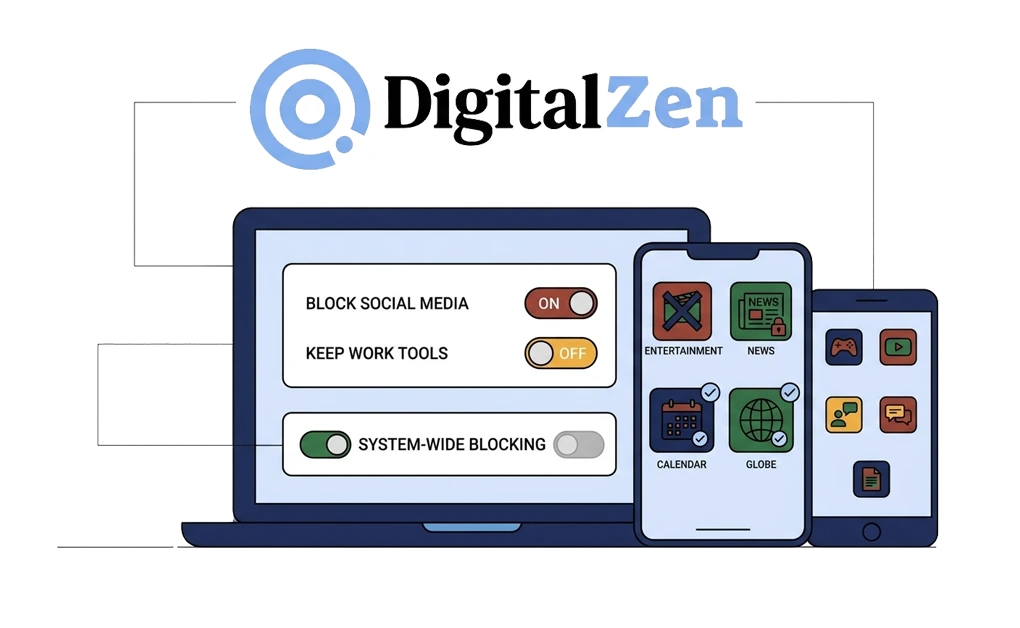
A dopamine detox may be easier to follow when your plan is set up before the urge to check appears. Blocking tools can help reduce access to the sites and apps you have already decided to pause.
Block Entertainment Categories
DigitalZen is a focus and productivity app that blocks distracting sites and apps. You can use it to:
- Block social media, streaming, gaming, and news sites during the detox window
- Keep work or school tools accessible by whitelisting what you need
- Apply system-level blocking across browsers, so switching browsers does not become an easy workaround
This helps create a clearer boundary between the tools you need and the distractions you want to pause.
Use Lock Features to Add Friction
Lock features add friction, so blocks are not easy to undo at the moment.
DigitalZen can help you use:
- Date-based locks that keep blocks active until a set date, so the detox does not depend on deciding again each time you feel tempted
- Cooldown timers that create a pause before a quick urge turns into another browsing session
- Accountability codes that make it harder to disable blocks alone during moments when checking feels automatic
These features can help when you already know a certain site or app is hard to pause, or when disabling a block would otherwise take only a few clicks.
Schedule Your Detox in Advance
Set up your blocks the night before or at the start of your planned break. This removes one more decision from the day itself.
Instead of asking, “Should I block this now?” you already have the boundary in place. That can make it easier to follow through when you are tired, bored, or tempted to check your usual apps out of habit.
Deciding If a Dopamine Detox Is Right for You
A dopamine detox is not a scientific brain reset. It can be a practical way to see which digital habits are taking more time, attention, or energy than you want to give them. Start with one habit that feels hard to pause, such as social media, short-form videos, gaming, or late-night scrolling. Try pausing it for a short, realistic period.
During the break, notice what changes. You may notice shifts in your focus, sleep, mood, or daily routine. You may also feel bored or restless at first, so plan simple replacements like walking, reading, cooking, journaling, or spending time offline.
The practical bottom line is to treat a dopamine detox as a short experiment, not a test of discipline. Choose one habit, set clear limits, and use tools that make the boundary easier to keep when checking feels automatic.
Linux users who want a step-by-step setup guide can start with doing a dopamine detox on Linux.
Frequently Asked Questions
How Long Should a Dopamine Detox Last?
It depends on your goals and routine. A 24 to 48-hour break can be enough for a first attempt. Some people try a 7 to 14-day break if they want more time to observe their habits.
You do not need to start with a long detox. A short, realistic break is often easier to complete and learn from. The best length is usually the one you can complete without disrupting essential work, school, or communication.
What Should I Avoid During a Dopamine Detox?
Common targets include social media, streaming services, video games, news feeds, short-form videos, and online shopping.
The goal is not to avoid all pleasure or all technology. The goal is to reduce access to the digital inputs that feel too automatic, distracting, or difficult to stop.
What Does a Dopamine Detox Feel Like?
Some people feel bored, restless, or irritated at first. Others feel relief because they are no longer checking apps as often.
Your experience may depend on what you block, how often you used it before, and what you do instead. If the break feels too difficult, start smaller or focus on one habit at a time.
It can also reveal when you usually reach for your phone, such as during boredom, stress, breaks, or late-night downtime.
What Are Signs of Low Dopamine?
It is better to avoid self-diagnosing “low dopamine.” Low motivation, fatigue, brain fog, low mood, sleep problems, and reduced enjoyment can have many possible causes.
If you experience these symptoms often, consider speaking with a healthcare provider. A dopamine detox should not be used to diagnose or treat a medical issue.
Can I Still Use Technology During a Dopamine Detox?
Yes. A dopamine detox does not mean avoiding all technology. You can still use work tools, school platforms, communication apps, maps, banking apps, and other essential tools.
The goal is to pause the digital habits that feel distracting or hard to control, while keeping the technology you genuinely need for work, school, communication, and daily life.
References:
- https://www.health.harvard.edu/blog/dopamine-fasting-misunderstanding-science-spawns-a-maladaptive-fad-2020022618917
- https://academic.oup.com/pnasnexus/article/4/2/pgaf017/8016017
- https://pmc.ncbi.nlm.nih.gov/articles/PMC10740995/