
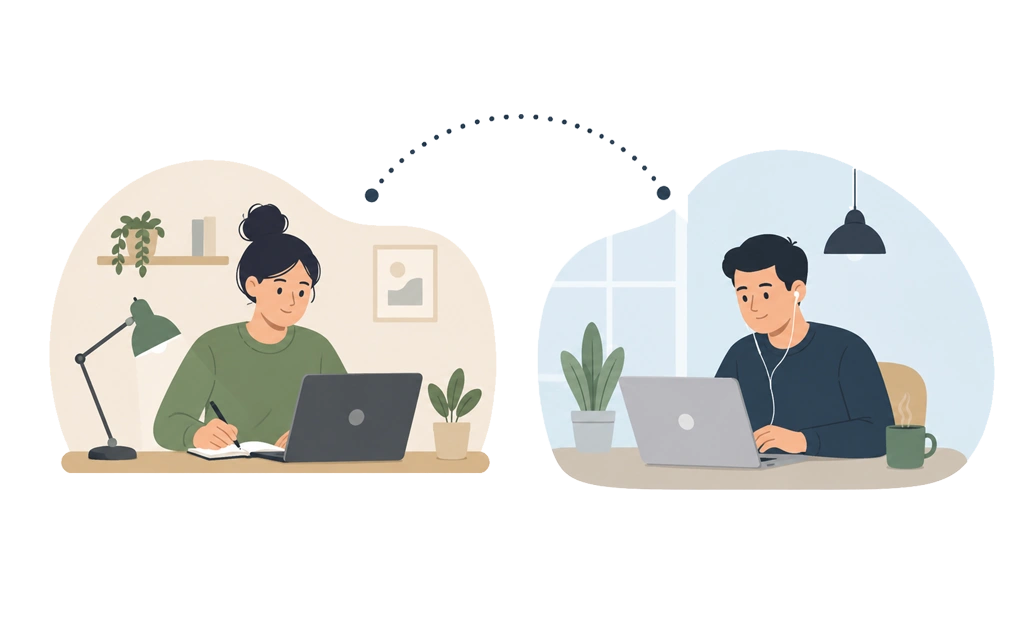
Body doubling means working on a task while another person is nearby, either in person or online. The other person does not need to help, supervise, or work on the same task. For some people, this shared presence can provide gentle accountability, social cues, and structure, especially when a task feels easy to avoid, hard to start, or difficult to stay with alone.
Key Takeaways
- Body doubling means working beside someone for gentle accountability: The other person does not need to help or collaborate. Their quiet presence may help you stay with the task.
- It may help because of social cues and structure: Having someone nearby can make boring, avoided, or open-ended tasks feel more manageable.
- It is often associated with ADHD communities, but it is not only for ADHD: People who struggle with procrastination, isolation, or task initiation may also find it useful.
- You can try it in person or online: Options include libraries, cafes, coworking spaces, video calls with friends, or virtual platforms like Focusmate or Flow Club.
- Pairing it with distraction blocking can make the setup stronger: Body doubling adds accountability, while blocking tools can reduce access to distracting sites and apps during the session.
- Body doubling may work better as part of a simple focus system: Shared presence can help you start, while blocking tools can make distracting sites harder to open during the session.
What Is Body Doubling?
Body doubling is the practice of working on a task while another person is nearby, either in person or online. That person is often called a “body double.”
The body double does not need to teach, supervise, or check your work. They may read, study, clean, work on their own project, or simply sit quietly nearby. Their presence can create a soft social cue to stay with the task you planned to do.
Body doubling is often discussed in ADHD communities, but you do not need ADHD to try it. It may also help people who find it hard to start, continue, or finish tasks alone.
How It Works
- You choose one task to work on.
- Another person stays nearby, in person or online.
- You both agree to focus for a set period of time.
- You may check in briefly at the start or end.
- You work quietly during the session.
- The session gives the task a clearer start and end point.
This can be helpful when a task feels boring, vague, stressful, or easy to avoid.
Examples of Body Doubling
- Doing homework while a parent or roommate is nearby
- Writing an essay over a video call with a friend
- Working at a cafe or library where others are also focused
- Cleaning the house while your partner does chores nearby
- Joining a virtual coworking session online
- Sorting emails while a coworker works quietly on their own task
What a Body Double Does
A body double helps create a focused setting. They do not need to manage you, remind you every few minutes, or watch what you are doing.
A helpful body double usually:
- Stays present during the session
- Works quietly on their own task
- Avoids unnecessary conversation
- Helps keep the session calm and focused
- Checks in briefly if needed
For many people, the value comes from quiet support, not pressure.
Why Working Alongside Others May Help You Focus
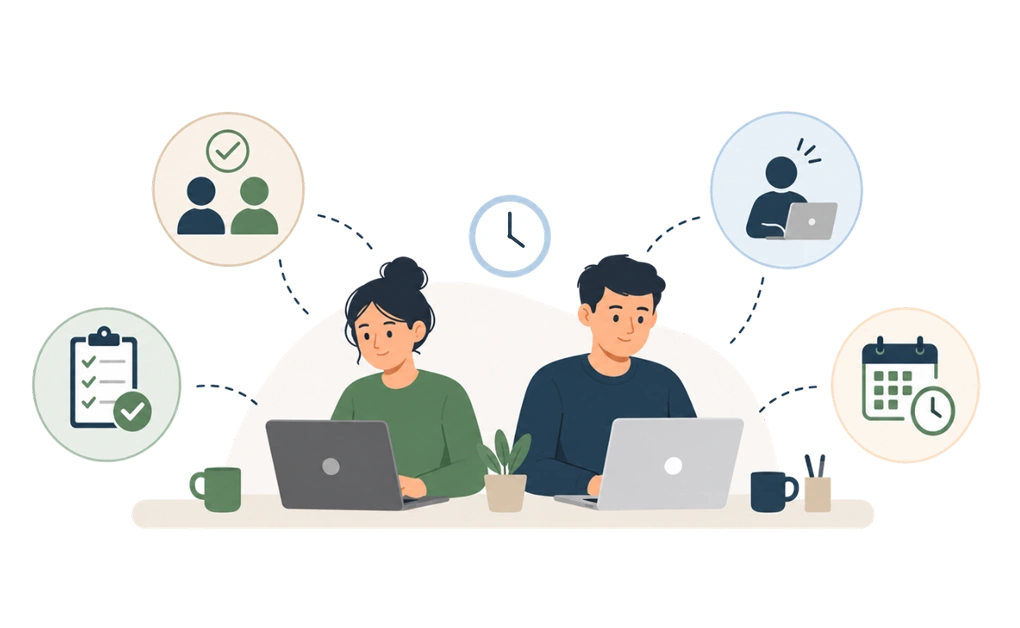
Research on body doubling is still limited, but early work and personal reports suggest it may help some people. It also connects with broader ideas like accountability, routine, and external structure, which can matter when focus is hard to maintain alone.
1. Gentle Accountability
Working alone can make it easier to drift away from a task, especially when the next step feels unclear or another tab is easier to open. When someone else is nearby, even quietly, you may feel more aware of what you planned to do.
This is not about shame or pressure. It is more like a soft reminder: “I am here to work on this right now.”
2. Making Boring Tasks Feel More Manageable
Some people with ADHD describe boring or open-ended tasks as harder to begin. Body doubling may help by adding a small amount of social structure to a task that would otherwise feel flat, easy to delay, or difficult to begin.
3. Modeling Focus
Seeing someone else work quietly can make it easier to settle into your own task. It creates a simple visual cue that says, “This is work time.”
This can be helpful when your environment usually invites distraction, such as working from home, studying alone, or trying to finish chores in a space where you usually scroll, rest, or switch tasks.
4. External Structure
Some people find it easier to focus when structure comes from outside themselves. A body doubling session gives you a time, place, and shared expectation.
That structure can make the next step feel clearer. Instead of deciding again and again whether to start, you already have a session set up.
Note: Body doubling is not a guaranteed solution. Some people find it helpful, while others may find another person distracting. It works best as one tool within a broader focus system.
Who May Benefit From Body Doubling?
Body doubling is often discussed in ADHD communities, but it can help different types of people depending on the task, setting, and personality.
People With ADHD
Body doubling is especially popular among people managing ADHD and focus challenges. Some people with ADHD find it harder to start, stay with, or switch between tasks on their own.
A shared work session may make it easier to start a task, stay with it, or return to it after a short break. It can also make boring tasks feel less isolating.
Remote Workers and Freelancers
Working from home can be flexible, but it can also feel lonely or unstructured. Body doubling can recreate some of the quiet social cues that naturally happen in an office.
It may be useful for freelancers and remote workers who miss working around other people but do not need constant meetings or collaboration.
Students
Students often use body doubling without calling it that. Studying in a library, joining a study group, or working beside classmates can all create a similar effect.
The shared setting can make it easier to stay with schoolwork, especially when assignments feel long or hard to start.
People Who Struggle With Procrastination
You do not need ADHD to try body doubling. If you often delay tasks, avoid chores, or struggle to get started, a shared session may help.
Sometimes the hardest part is beginning. Knowing someone else is showing up at the same time can make the task feel more real and easier to approach.
People Who Feel Isolated
Body doubling may also help people who feel disconnected during work or study time. A quiet video call or coworking session can add a sense of connection without requiring constant conversation.
For some people, that light social contact makes work feel less draining.
Ways to Try Body Doubling In Person and Online
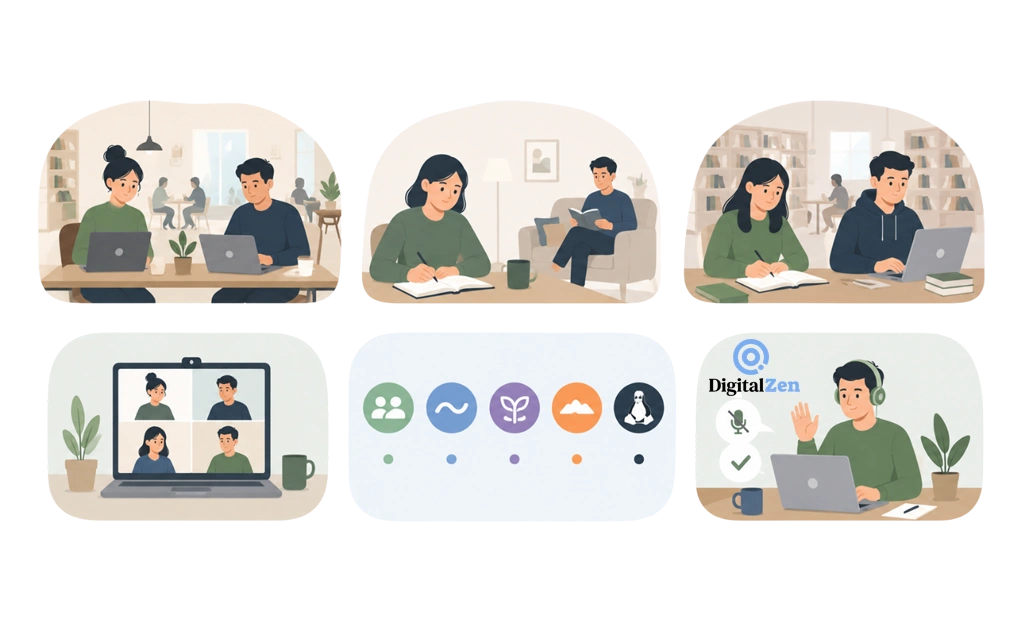
Body doubling can be simple. You do not need a formal program to start. You can try it with a friend, family member, coworker, classmate, or online group.
In-Person Options
You can try body doubling by:
- Working at a library or cafe where others are focused
- Using a coworking space
- Asking a friend or family member to sit nearby while you work
- Cleaning or doing chores while someone else is home
- Studying beside a classmate without needing to talk
The goal is not to create pressure. The goal is to make the task feel easier to begin and continue.
Virtual Platforms
Several platforms offer structured virtual body doubling:
- Focusmate pairs people for timed coworking sessions
- Flow Club offers hosted group sessions with check-ins
- FLOWN provides facilitated focus sessions with breaks
- Deepwrk offers online coworking sessions for focused work
Linux users can find platform reviews in body doubling apps for Linux.
Informal Video Calls
You can also keep it simple with a friend:
- Start a video call
- Say what each of you plans to work on
- Stay muted while working
- Check in at the end
- Keep the session short enough to feel doable
This works well when you want accountability without joining a formal platform.
For Students
Students can try body doubling in several ways:
- Study with classmates in person or online
- Join a study group or virtual study hall
- Work in the library where others are studying
- Set a shared start and stop time for homework
Students already use body doubling principles in study groups, virtual study halls, and library sessions. Linux users can also use tools that support group study and focus sessions.
Combining Body Doubling With Distraction Blocking
Body doubling can help create accountability, but distractions can still pull you away. If your session happens on a computer, it may help to block the sites or apps that usually interrupt your focus.
This is where body doubling and distraction blocking can work well together.
Why Combine the Two
- Body doubling adds social accountability when it is hard to start alone
- Distraction blocking reduces easy access to tempting sites when habits take over
- Together, they support both focus and follow-through
- The setup can make it easier to stay with one task at a time
This can be useful if you often start a session with good intentions but end up checking social media, news, or video sites.
How DigitalZen Helps
DigitalZen is a desktop focus and productivity app for Windows, macOS, and Linux. It helps block distracting sites and apps during focus sessions. You can use it alongside body doubling to create a stronger focus setup.
During a session, you can use DigitalZen to:
- Block social media, news, and video sites
- Schedule blocks so distractions are removed automatically
- Whitelist only the tools you need for work
- Add friction so blocks are harder to disable mid-session
This helps protect the session from the distractions that usually break your focus.
A Simple Focus Stack
Here is one way to combine body doubling with distraction blocking:
- Schedule a body doubling session, either in person or online
- Choose one task before the session begins
- Start a DigitalZen focus session at the same time
- Block distracting sites and apps during the session
- Work beside your body double until the session ends
- Take a short break before starting the next task
This gives you both accountability and fewer digital temptations.
Between Sessions
Breaks can easily turn into long browsing sessions. If that happens often, you can use DigitalZen’s allowance feature to limit casual browsing between focus blocks.
This does not have to mean blocking everything. You can set a small amount of time for casual browsing, so a break still has a clear stopping point before the next planned task.
Tips for Making Body Doubling Work Better
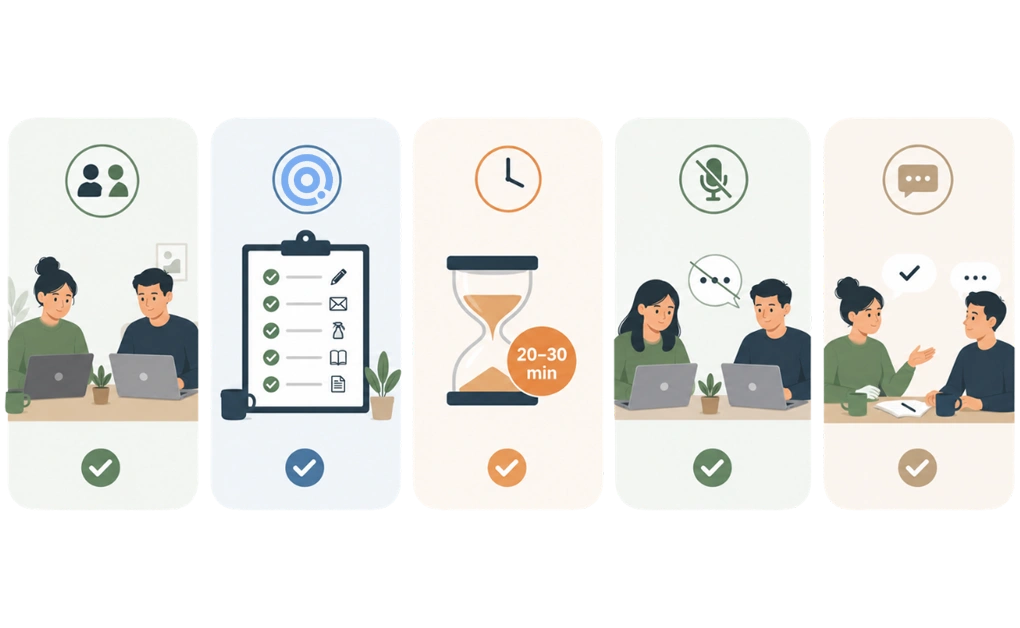
Body doubling is simple, but the right setup matters. A few small choices can make the session more useful.
Choose the Right Person or Group
A good body double should make it easier to focus, not harder. Choose someone who can stay quiet, respect the session, and avoid turning it into a long conversation.
If one person feels distracting, try a different setup. Some people focus better with a friend. Others prefer strangers in a virtual coworking room.
Start With a Clear Task
Before the session begins, decide what you will work on. Keep it specific.
Instead of:
Work on project
Try:
Write the intro
Sort 20 emails
Clean the kitchen counter
Read 10 pages
Finish one section of the report
A clear task makes it easier to start and easier to know when you are done.
Use Short Sessions First
You do not need to begin with a long work block. A 20 to 30-minute session may be enough to test whether the method helps.
Short sessions can feel less overwhelming, especially if the task is something you have been avoiding.
Limit Talking During the Session
A quick check-in at the start can help. After that, try to keep conversation low.
You might say:
I’m going to work on my report for 30 minutes. What are you working on?
Then both people work quietly until the session ends.
Review What Worked
At the end, ask yourself:
- Did I start more easily?
- Did I stay on task longer?
- Was the other person helpful or distracting?
- Would a shorter or longer session work better?
- Do I need stronger distraction blocking next time?
This helps you adjust the setup instead of forcing one format to work.
Trying Body Doubling for Yourself
Body doubling is a simple strategy worth testing if you struggle to focus alone. It may help by adding quiet accountability, social cues, and a clearer structure around the task.
You can start small. Ask a friend to work beside you, visit a library or cafe, or join a virtual coworking platform like Focusmate, Flow Club, or FLOWN. If one format does not work, try another. Some people prefer silent sessions. Others like brief check-ins at the beginning and end.
For best results, combine body doubling with distraction blocking. Accountability helps you stay present. Blocking removes easy access to the sites and apps that usually pull you away. Together, they can create a focus system that gives you support before and during the session.
Body doubling may not work for everyone, and that is okay. Treat it as an experiment. Try different settings, session lengths, and partners until you find what feels useful.
For more focus strategies, staying focused with ADHD on Linux covers additional approaches.
Frequently Asked Questions
What Is Body Doubling?
Body doubling means working on a task while another person is present, either in person or online. The other person does not need to help or work on the same thing. Shared presence can make it easier to start, stay focused, or finish the task.
Does Body Doubling Actually Work?
Many people report finding body doubling helpful, especially in ADHD communities. Research is still limited, so it is best to treat it as a practical strategy to test rather than a guaranteed solution. It may work well for some tasks and not others.
Is Body Doubling Only for ADHD?
No. Body doubling is often associated with ADHD, but it can help anyone who struggles with procrastination, task initiation, isolation, or staying on track. Remote workers, students, freelancers, and busy professionals may also find it useful.
What Habits Can Make Focusing Harder for People With ADHD?
Some habits may make focus, energy, or follow-through harder for some people, such as poor sleep, irregular routines, cluttered workspaces, too much screen time before bed, skipped meals, or long periods without movement.
Body doubling does not replace these basics, but it can add structure when a task still feels hard to start. These are general patterns, not rules. What affects one person may not affect another in the same way.
What Is a Helpful Environment for ADHD Focus?
There is no single best environment for everyone. Some people focus better in quiet spaces. Others work better with light background noise or people nearby.
Helpful features may include:
- Fewer visual distractions
- A clear workspace
- Noise-canceling headphones or steady background sound
- Natural light when possible
- Visual reminders
- A simple routine
- A clear next step
A useful environment is usually one that lowers mental clutter and makes it easier to begin.
Reference: