

Digital boundaries often fail for people with ADHD because the brain skills that hold a boundary, such as planning, follow-through, and noticing time, are the same skills ADHD makes harder. This is not a lack of self-control. It is a mismatch between how most boundaries are designed and how an ADHD brain actually works. The fix is to move enforcement outside the brain.
Key Takeaways
- Often not a willpower problem: ADHD can make the brain skills that hold boundaries harder, which is why standard advice often misses.
- The reasons boundaries fail cluster around five patterns: Time blindness, energy swings, novelty pull, hard moments, and follow-through gaps tend to break rules in ways effort cannot fix.
- Standard advice often asks for the wrong skills: “Just put your phone away” puts the work in the same moment ADHD makes hardest, so it tends to miss.
- External structure tends to hold better than in-the-moment effort: A schedule that runs on its own, a pause before an unlock, and a setup that does not depend on willpower often outlast a setup that does.
- A slip is usually information, not failure: When a boundary breaks, the design is what to adjust, not the person. Small changes tend to outlast strict resets.
What ADHD Has to Do With Digital Boundaries
ADHD can affect the brain skills that help you plan, start, and follow through. These skills are often called executive function. A digital boundary often asks you to use the very same skills in the exact moment they are hardest to use. So when a rule fails, it may not be because you did not care. It can be because the rule was designed for a brain that works differently from yours.
If you have tried every blocker, every timer, and every app-free hour, and still ended up back where you started, that may not be a personal failure. It is often a mismatch between common advice and how ADHD tends to work. The good part is that the mismatch can often be eased by changing the design of the boundary, not the strength of your effort.
This is where a focus tool built for ADHD and focus challenges can take on some of the work your brain is asking for, instead of leaving it to a single moment of resolve.
Five Reasons Digital Boundaries Fail With ADHD
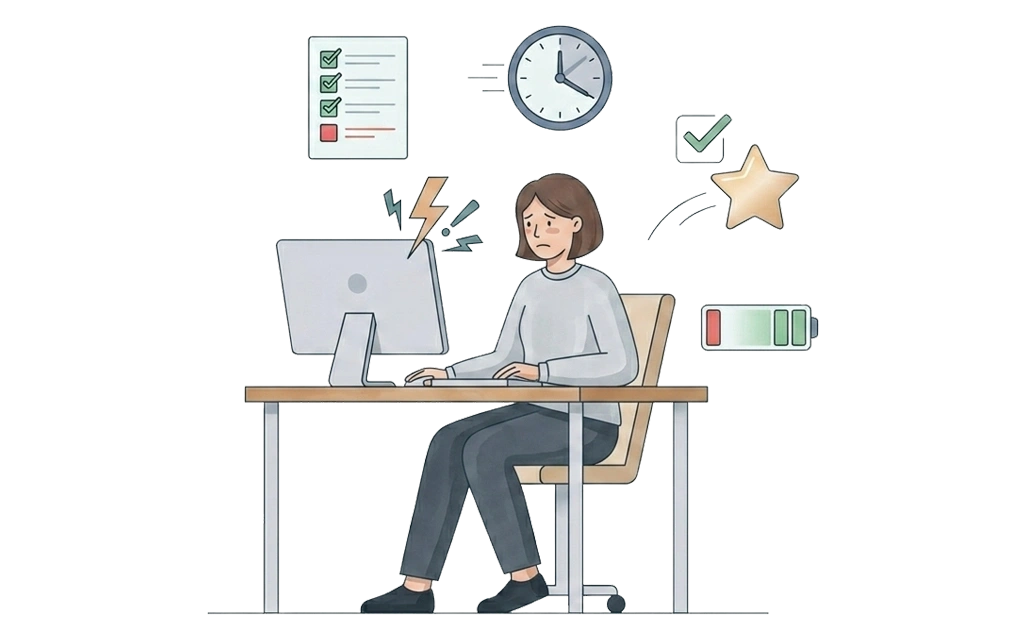
Many failed boundaries trace back to one of five patterns. They are rarely about effort. They are usually about how the brain that sets the rule is also the brain that has to keep it.
1. Planning and Follow-Through Are the Hard Part
The brain skill that sets a boundary is the same one that has to enforce it hours later, and ADHD can make both harder. So you may plan a perfect rule on Monday, fully believing it will hold, and then find yourself breaking it on Tuesday with no memory of caring about it. This is not a failure of intention. It is a follow-through gap that is often hard to close with effort alone.
2. Time Blindness Makes “Just Five Minutes” Disappear
Many people with ADHD describe time blindness, which is a difficulty in noticing how much time has passed. “Just five more minutes” can become an hour because the time check itself is the missing step. A timer can ring, and you can hear it, and still not register that the limit has come. A practical guide on how to control screen time when you have ADHD covers setup ideas that work around this.
3. Hard Moments Override Quiet Promises
A boundary set on a calm day can stop feeling real on a hard one. Bored, stressed, tired, or stuck, the rule can start to feel like a guideline rather than a wall. The quick relief of a familiar app feels closer than the calm promise you made yesterday. That shift is not necessarily about weakness. It is often the brain reaching for an easy fix in a hard moment.
4. Novelty Feels Better Than Sticking to a Plan
A new tab, a new video, or a new notification can feel rewarding in a way a steady plan never does. For many people with ADHD, the pull of something new can be stronger than the rule against it. Doomscrolling is the classic example, since each swipe is a fresh small spark. There are ways to stop doomscrolling with ADHD that tend to help more than telling yourself to stop.
5. Energy Is Not Steady, So Rules Cannot Be Either
For many people with ADHD, energy comes in waves. A rule you set during a high-energy hour, full of plans and ambition, can feel impossible during a low-energy afternoon. Boundaries built for your best day tend to struggle on your harder ones. A better approach is not to set tougher rules, but to set rules that hold even when your energy does not.
Why Standard Boundary Advice Falls Short
Most boundary advice assumes neurotypical follow-through. “Just put your phone away.” “Set a timer and stick to it.” “Have some discipline.” All of these can put the work in the same moment your brain may be least able to do it. The advice is not wrong for everyone, but it tends to miss for people with ADHD.
Blocking tools can have a similar problem. Some of them rely on a single quick-disable button, which means the only thing between you and the distraction is often little more than one click in a tired moment. A deeper look at why most website blockers fall short for ADHD covers this in detail. The short version is that an easy off switch tends to be off in the moments you need it most.
Key insight: A boundary you have to enforce in the moment rarely holds. The shift is to set up enforcement when you are steady, so it protects you when you are not.
What Tends to Work Better for ADHD
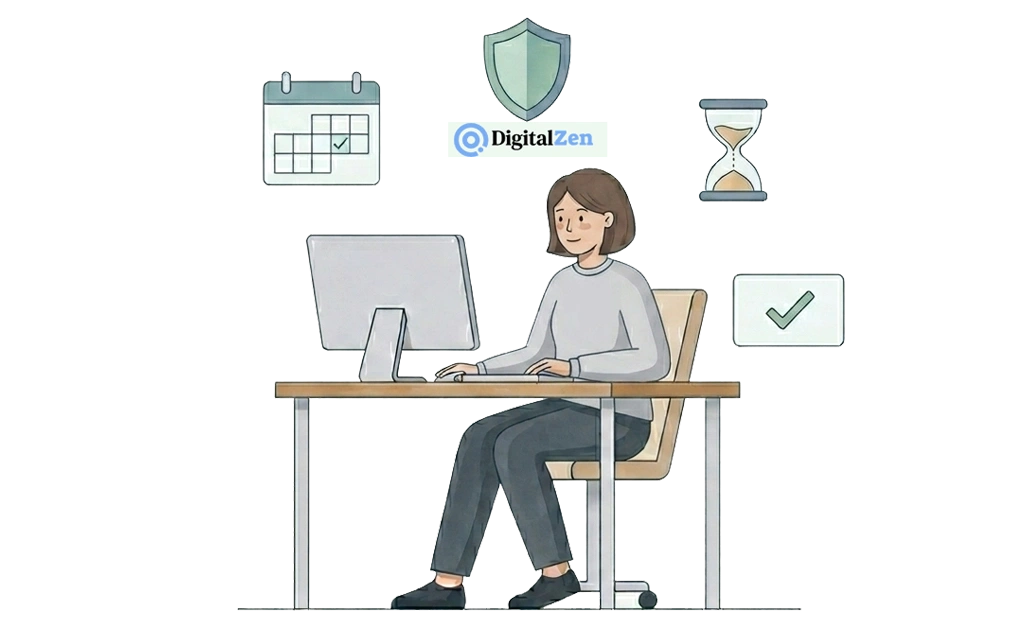
The shift that tends to help many people with ADHD is to stop relying on in-the-moment self-control and start relying on structure that was set up earlier. The boundary still belongs to you. It can do its job without needing you to be at your best.
Four approaches tend to work well together:
- External enforcement. Let a tool hold the boundary, not your in-the-moment self. A schedule that turns on automatically does not need to be remembered.
- Pre-commit on steady days. Set up the block when you are calm and clear, so it protects you when you are not. The energy you have right now is the energy that builds the system.
- Build in a pause. A short cooldown before an unlock gives your thinking brain time to catch up. The pause does not stop you. It just slows the impulse enough that the urge often passes.
- Block by default, allow what you need. Instead of choosing what to block each day, block widely and whitelist only what you actually need. Fewer decisions mean fewer chances for the system to break.
DigitalZen is built around this kind of structure. Scheduled blocks run on their own. Adaptive locks add a pause between an impulse and an unlock. Daily allowances give you a set amount of time on a tempting app without leaving the choice open all day. Focus mode blocks everything except the tools you actively need. The point is not stricter rules. It is fewer rules you have to hold in your head.
What Happens When a Boundary Slips
A boundary will slip sometimes, and that is part of the process, not a sign the system is broken. What tends to matter most is how the slip is read, and what gets adjusted afterward. A slip is often more useful as information than as evidence that something has failed.
A calmer way to read a slip often looks like this:
- The slip points at the design, not the person. The part that failed is usually the schedule, the lock, the choice of app, or the time window. The slip is information about the setup.
- The adjustment is usually in the system, not in trying harder. When the lock is easy to override, a stronger one tends to hold better. When the schedule does not match real evenings, different hours tend to work. The change is almost always in the design.
- One slip is normal. A repeat slip is worth noticing. The same slip three times in a week often points to a real change worth making. A single slip rarely does.
- Keeping the setup tends to work better than starting over. Uninstalling the tool after a slip resets the progress. Adjusting one setting keeps the structure in place and lets the next attempt build on the last.
A Calmer Way to Set Digital Boundaries With ADHD

The goal is not more discipline. There is less reliance on it. A boundary that needs you to be sharp, steady, and focused every time it is tested is a boundary set up to fail. A boundary that runs on a schedule, adds a pause, and holds without your in-the-moment effort is the kind that tends to last.
Start with one boundary, not ten. The most common reason an ADHD-friendly setup fails is trying to fix everything at once. Pick the single boundary you most wish would hold this week, set it up while you feel steady, and let the tool do the rest. Once it feels natural, add another. A companion guide on how to build digital boundaries that actually hold walks through the setup itself, step by step.
With DigitalZen, you can start now for free and build the kind of external structure that suits how your brain actually works.
For ADHD itself, the right starting point is professional support from a doctor, therapist, or ADHD coach. A tool like DigitalZen can sit alongside that work to handle the digital side, not replace it. For a broader view, here is a guide to staying focused with ADHD.
Frequently Asked Questions
Is It True That ADHD Makes Digital Boundaries Harder?
Yes, for many people. ADHD can affect the brain skills that help you plan, follow through, and notice time, which are the same skills a digital boundary depends on. So a rule that works easily for someone else can fall apart for you, even when you care about it just as much. The mismatch is common, and it is often not about effort.
Why Do I Keep Breaking Time Limits I Set for Myself?
Time limits often break because of time blindness, which is a common ADHD pattern. The minutes pass without you noticing, and by the time you check, the limit is long gone. Limits tend to hold better when the tool enforces them automatically, instead of relying on you to watch the clock yourself.
Are There Blocking Tools Designed for ADHD?
Some tools are built with the needs people with ADHD often have in mind, including adaptive locks, scheduled blocks, and protection layers that make a block hard to undo on impulse. DigitalZen is one example. The features that tend to help most are automatic scheduling, friction before an unlock, and a setup that does not depend on a single quick-disable button.
Can a Blocker Replace ADHD Treatment?
No. A blocker is a supportive tool, not a treatment for ADHD. For ADHD itself, professional support from a doctor, therapist, or ADHD coach is the right starting point. A blocker can sit alongside that work, helping handle the digital side, but it is not a substitute for proper care.
What Is the First Boundary I Should Try With ADHD?
Pick the smallest one that would help most. A common starting point is one daily cutoff for the app that pulls you in the most. Set it up when you feel steady, and lock it behind a short cooldown so a tired moment cannot undo it. One boundary that holds for a month is far more useful than ten that fail in a week.